A quiet fan is first and foremost a fan whose noise figure and motor type have been checked. Everything else (design, remote control, app) comes second. This guide explains how to read a product listing, which format to choose for each room, then presents four models taken from listings read on 28 November 2026, from the quietest stated to the most affordable.
Note: the figures in this guide come from the manufacturers’ product sheets and Amazon product listings, read on 28 November 2026. Models, versions and availability can differ on Amazon.co.uk: each button opens the Amazon.co.uk page of the model, or an Amazon.co.uk search for it when that page does not exist.
The essentials in 30 seconds
- Compare the noise level at the lowest speed: that is the one you will use at night.
- A DC motor (direct current) allows for many speeds and very slow speeds, where conventional motors are often limited to three settings.
- For a bedroom, a timer and a display that switches off matter as much as the decibels.
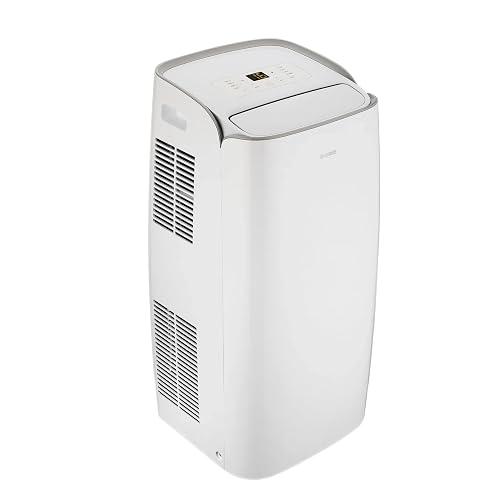
- A fan does not cool the air: it circulates it. If the room stays very hot even at night, you will need to look at a portable air conditioner.
How to read the decibels on a product listing
Manufacturers almost always give a single figure, measured at the minimum speed and under their own conditions. Two listings are therefore not perfectly comparable, but the order of magnitude is still telling:
| Stated level | What this represents in practice |
|---|---|
| Under 20 dB | Close to the silence of a bedroom at night |
| 20 to 30 dB | A slight breeze, comparable to a whisper |
| 30 to 45 dB | An audible background noise, around the level of a quiet library |
| Over 45 dB | Clearly audible in a bedroom |
Two pitfalls come up often. The first: a listing that says "quiet" without any figure. The second: a figure given without specifying the speed. If in doubt, assume it is the slowest speed, and that the fan will be noticeably more audible at full power.
The decibel scale is logarithmic: 10 dB more corresponds to a noise perceived as around twice as loud. The gap between a model at 20 dB and a model at 43 dB is therefore much bigger than it appears.
Which fan to choose for each room
Pedestal: the most versatile format. The adjustable height lets you aim it at the bed or the desk, and recent models with a DC motor go very low in speed. It is the best choice if silence is your main priority.
Tower: a small footprint on the floor and airflow distributed over the height. Entry-level tower fans are often noisier, because their impeller spins fast to compensate for its small size.
Ceiling: large blades that turn slowly move a lot of air without whistling. You need an electrical installation in the ceiling and sufficient height, but nothing trails on the floor.
Table: handy on a desk, but a small diameter forces the blade to spin fast. Noise rises quickly with speed.
The criteria that make the difference
- The number of speeds: with 3 settings, the gap between "too weak" and "too noisy" is often brutal. Beyond ten speeds, it is easier to find the right setting.
- Night mode: it switches off or dims the display and cuts the beeps. On a model without this mode, a lit LED can be as much of a nuisance as the noise.
- The timer: it avoids leaving the fan running all night.
- Oscillation: useful for several people. Vertical oscillation as well as horizontal distributes air better in a large room.
- Power consumption: a DC motor often states a few watts at low speed, against several tens for a conventional motor.
Noise
The stated dB level, above all for a bedroom.
Speeds
The more settings, the easier it is to find the right one.
Oscillation
It spreads the air across the room instead of one lane.
Timer
It saves leaving the fan running all night.
Our selection of quiet fans
These four models were chosen from manufacturers' listings and Amazon listings, to cover the four most common uses. We have not handled them: the figures quoted are those stated by the brands.
Duux Whisper Flex 2: the quietest claimed

Duux states 13 dB for the Whisper Flex 2, the lowest figure in this selection. It has 30 speeds, with a natural breeze mode, and converts from a 54 cm table format to a 92 cm pedestal format. The DC motor is stated at 2 W. For the bedroom, the listing mentions a timer of up to 12 h, a night mode that dims the display and a child lock. A separately sold battery allows cordless use, up to 11 h according to the brand.
DREO PolyFan 20 dB: for circulating air throughout the room

The DREO is stated at 20 dB, in the "ultra quiet 20 dB" fan category. Its strong point is oscillation: 120° horizontally and 120° vertically at the same time, to send air into every corner of a living room. It is controlled by remote, with the Dreo app or a voice assistant. It is the logical choice if the fan needs to serve several people.
Amazon Basics 71 cm tower fan: the cheap quiet fan

If budget comes first, this 71 cm tower remains an honest option, provided you know its figure: 43 dB at the lowest speed, according to Amazon. That is noticeably more audible than the two previous models, but the listing deserves credit for stating it. It offers 3 speeds, a 60° oscillation and simple controls (a dial and a button). Its slim format slips into a corner of an office or living room.
CREATE Windcalm: the quiet ceiling fan

The quiet ceiling fan is a very frequent search, and with good reason: nothing on the floor, and large blades that turn slowly. The Windcalm by CREATE measures 112 cm in diameter, with a 40 W DC motor and 6 speeds. The brand does not give a figure in decibels. The remote controls a timer of 1 to 4 h and a 15 W LED light with three colour temperatures. The summer/winter function reverses the direction of rotation of the blades.
What about Rowenta Turbo Silence?
It is one of the most searched brands for a quiet fan. As of 28 November 2026, the listings read for this brand concerned only spare parts or models not offered for purchase.
Maintaining your fan so it stays quiet
A fan that becomes noisy over time often simply needs a clean. Dust on the blades unbalances the propeller and creates vibrations.
- Unplug the appliance before doing anything.
- Dust the grille and blades with a slightly damp cloth, following the instructions.
- Check that the fan is placed on a flat, stable surface: a wobbly base is enough to make the whole thing vibrate.
- For a ceiling model, check the tightness of the fixings from time to time.
Our other guides for cooling the home
- Tower fan: oscillation, height and remote compared.
- Portable air conditioner: power in BTU, hose and models without exhaust.
- Misting fan: tank, mist and use indoors or on a patio.
FAQ
What is the quietest fan on the market?
Among the models in this selection, the Duux Whisper Flex 2 has the lowest figure in our selection, at a stated 13 dB. This figure comes from the manufacturer and corresponds to the minimum speed.
Can a quiet fan run all night?
Yes, that is the intended use of most models with a DC motor. A timer is still useful so that it switches off once the room has cooled down.
Fan or portable air conditioner: which should you choose?
A fan circulates the air and creates a feeling of coolness, without lowering the room temperature. A portable air conditioner actually cools the air, but it uses more energy and is noisier. For a bedroom and hot nights, a quiet fan is often enough.
Sources
Specifications taken on 28 November 2026 from the listings for the models mentioned (texts provided by Duux, DREO, Amazon Basics and CREATE). CREATE does not give a noise level in decibels for the Windcalm: it therefore does not appear in the chart.